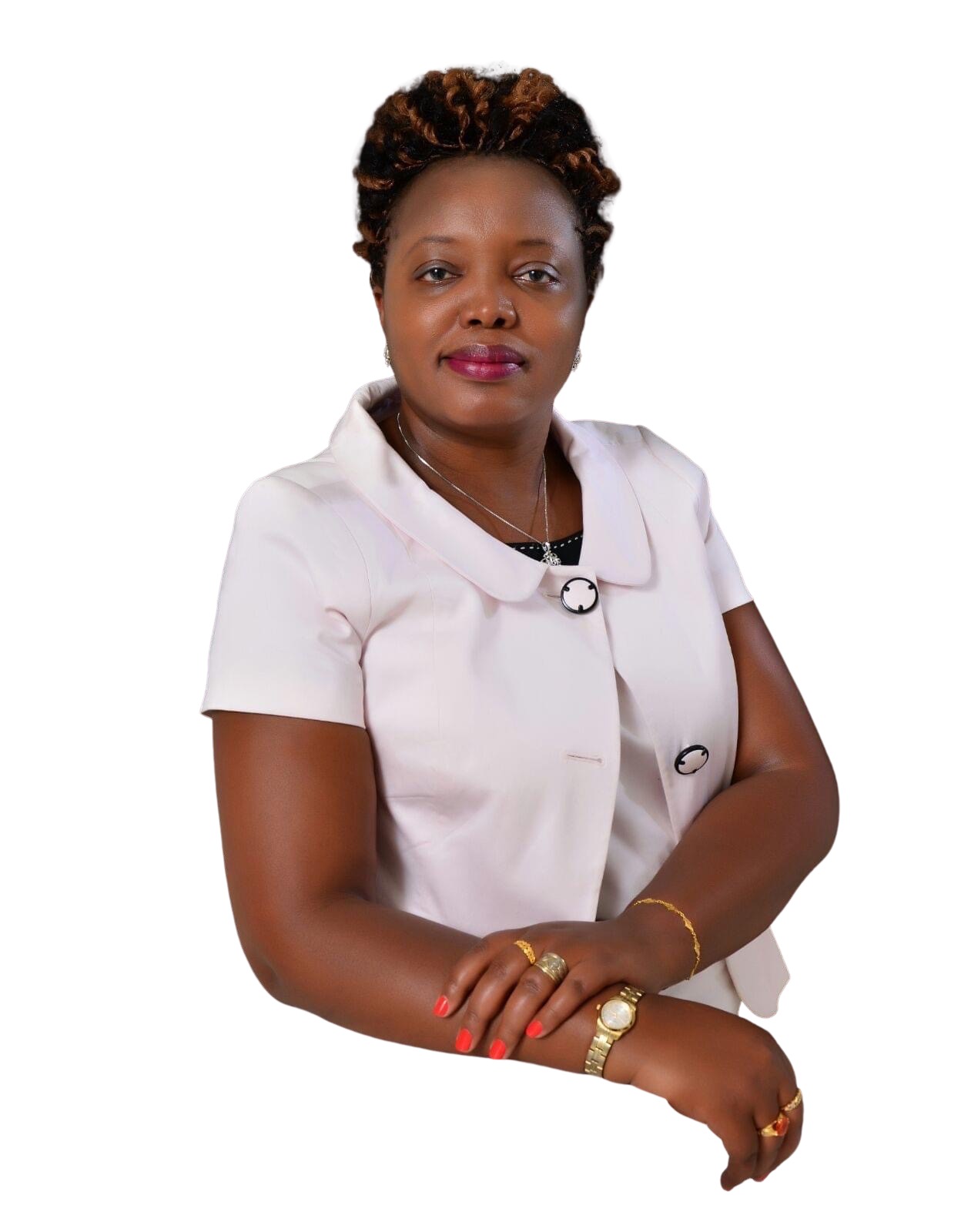


HON. NJERI MAINA
Woman Representative
Kirinyaga County
The Health( Amendment )Bill( No 2 )Bill,2024
The bill seeks to amend the Health Act (Cap 241) to criminalize the detention of discharged patients and the withholding of bodies of deceased persons by public healthcare facilities over unpaid medical bills. It also mandates that public hospitals provide emergency medical treatment before demanding upfront payment.
The Kenya School of Law(Amendment )Bill
• Hon. Maina’s bill sought to amend the Second Schedule of the Kenya School of Law Act by inserting a new provision (Paragraph 1A). This clause would legally obligate KSL to admit candidates to the ATP if they:
1. Attained the minimum entry requirements for a Diploma in Law.
2. Obtained a Diploma in Law from a recognized institution in Kenya.
3. Subsequently completed and obtained (or became eligible for) a Bachelor of Laws (LLB) degree from a recognized university.
Njeri Maina’s Health (Amendment) Bill would guarantee emergency treatment before payment and make it an offence for a hospital to detain a patient or a body over an unpaid bill.
Few practices offend Kenyans’ sense of dignity more than a hospital refusing to release a patient – or even a body – until the bill is settled. Njeri Maina, Kirinyaga County Woman Representative, set out to end it with the Health (Amendment) (No. 2) Bill, 2024. The bill seeks to guarantee emergency treatment before payment and to make it an offence for a health facility to withhold treatment or detain a deceased person because of an unpaid bill. The National Assembly has passed it, moving the principle closer to law: care must come before a patient’s ability to pay.
Her second legislative proposal concerns the legal profession itself. The Kenya School of Law (Amendment) Bill, 2023 would open the Advocates Training Programme to applicants who meet the entry requirements for a Diploma in Law or hold such a diploma, rather than only those with a B in English or Kiswahili and a C+ mean grade in KCSE – widening the route into practice for capable students whose secondary-school grades fell short. In the House she sits on the Committee on Powers and Privileges.
In October 2026 Njeri turned to women’s health, urging Parliament to treat endometriosis as a public-health issue rather than a private burden. The condition affects an estimated one in ten women of reproductive age worldwide, yet diagnosis often takes years. She called for it to be included in the Universal Health Coverage agenda and covered by the Social Health Authority, for diagnosis and specialist treatment to be available through county and regional referral hospitals, and for health-worker training, menstrual-health education, research and national guidelines on diagnosis, referral and treatment. They remain recommendations, but they placed a long-neglected condition firmly before the House
Njeri is a lawyer, and in 2025 she applied that training beyond the chamber. During the youth-led protests of that year, which followed the “Gen-Z” demonstrations of 2024 against the Finance Bill, many young people were arrested. By the afternoon of 19 July 2025, she said, her campaign had raised KSh997,527 to help secure cash bail for detained protesters, and she had offered pro bono legal services to more than 150 young people across several counties. Families needed help while arrests and court appearances were unfolding, not merely a later debate about civil liberties.
That work brought international recognition. In October 2025 she received a Champion for Justice Award from the Governor of Delaware, Matt Meyer, on behalf of the Delaware community. Accepting it, she acknowledged the lawyers, campaign teams and online influencers who had worked alongside her, making clear that the effort had been collective.
Her community work has also addressed the cost of staying in school. At Kutus Primary School on 20 April 2024 she joined Kirinyaga Senator James Murango Kamau to distribute KSh3 million in bursaries to 50 children; at the same event, 521 learners – among them orphans and children with disabilities – received scholarships worth KSh1 million. The occasion showed two elected representatives working together rather than presenting shared public delivery as an individual achievement.
The Tupange Kesho initiative, delivered with partners, linked education support with wider community needs. It provided 25 water tanks of 5,000 litres each, 45 tents each able to hold 100 people and more than 1,135 plastic seats, and engaged marginalised women’s and youth groups around their immediate needs. The items were modest but practical: water storage to carry an institution or group through shortages, tents to make community gatherings possible and seating to make shared spaces usable.
Njeri’s contribution is clearest where policy and practical support meet. In the House she has secured passage of a bill for emergency care without payment barriers, proposed wider access to legal training and pressed for a stronger public response to endometriosis. In the community she has supported learners, facilities and young people in need of legal help. The priorities ahead are visible in her work: the health bill’s final stages, the Kenya School of Law bill, wider access to endometriosis care, and continued support for learners and marginalised groups through Tupange Kesho.