
TRANSLATING POLICY INTO MEASURABLE ECONOMIC POWER FOR WOMEN
Translating policy into meaningful economic outcomes for women requires coordination, accountability, and measurable results.
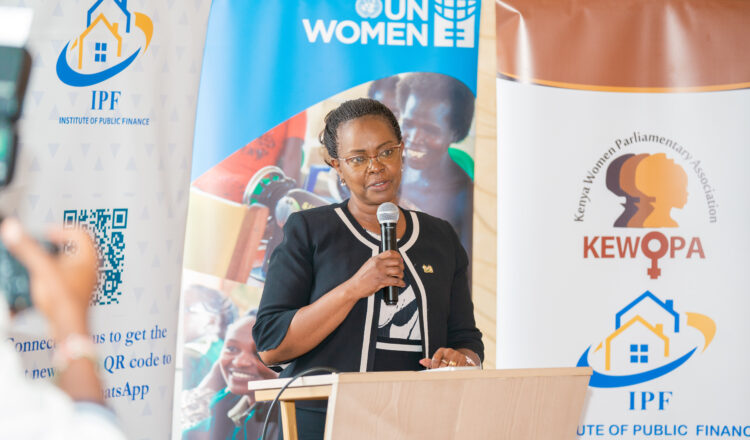
The Kenya Women Parliamentary Association convened a sensitization workshop on the National Policy on Women’s Economic Empowerment, bringing together Parliament, government, and development partners to align on implementation.
The session was led by the Principal Secretary for Gender and Affirmative Action, Anne Wang’ombe, who pointed to fragmentation across programmes as a key barrier. Multiple initiatives exist across sectors such as agriculture, trade, and enterprise development, but weak coordination and lack of structured linkages have limited impact.
The policy is designed to address this by providing a framework that connects existing initiatives, aligns resources, and strengthens accountability across institutions. It does not replace current programmes but seeks to improve coherence and results.
Discussions focused on the gap between policy design and implementation. Participants called for clarity on roles, including how the policy complements mechanisms such as the National Government Affirmative Action Fund without duplicating mandates.
Participants also called for stronger data systems to track how resources reach women, measure outcomes, and identify gaps at the grassroots level. Limited data continues to weaken decision making and accountability.
Women leaders highlighted pressure to deliver with limited resources. This reinforced the need for increased budget allocation and stronger institutional support.
Participants agreed that economic empowerment requires a coordinated system that addresses access to finance, markets, skills, and social protection. Key barriers include limited market access, constrained financing, unpaid care work, and structural constraints.
There was emphasis on measurable impact at household and community level. The policy is positioned as a tool to integrate efforts across sectors and ensure women benefit from public investment.
Participants also called for increased participation of women in leadership and decision making, supported by civic engagement and targeted support.
There was agreement on strengthening grassroots approaches, including group based models and scaling successful initiatives.
KEWOPA reaffirmed its commitment to ensuring the policy is clear, implementable, and responsive to the realities of Kenyan women. The focus is on a coordinated, well resourced system that delivers results and expands women’s participation in economic and leadership spaces.
Memory full
Responses may feel less personalized. Upgrade to